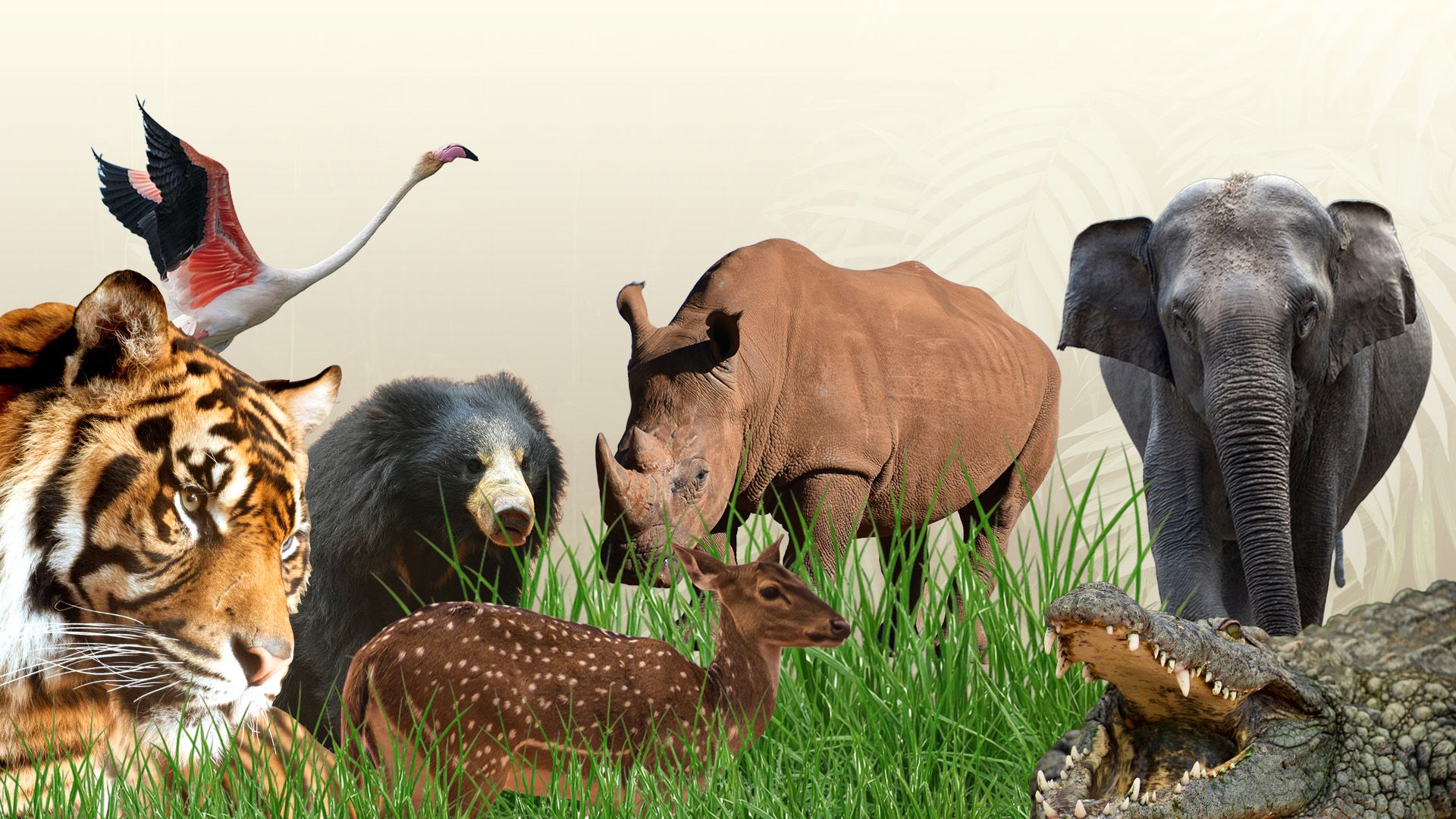
Every year on December 4, we observe World Wildlife Conservation Day, a reminder of the urgent need to protect India’s rich natural heritage from extinction, habitat loss and increasing human pressures. Wildlife includes not only animals but entire ecological networks of plants, insects, rivers, wetlands and forests that support life and livelihoods across the country.
India is recognized as one of the 17 megadiverse nations, hosting nearly 8 percent of the world’s recorded species. The country supports over 500 mammal species, 1,300 bird species, more than 400 reptiles, 1,000+ fish species, and thousands of plants and invertebrates. Yet, rapid land use change and fragmentation threaten these ecosystems. India has lost nearly one third of its natural wetlands in the last few decades, and almost 95 percent of its forest areas lie outside designated wildlife reserves, making them vulnerable to degradation and encroachment. Human wildlife conflict incidents, especially involving elephants and big cats, have also increased due to shrinking habitats and disrupted corridors.
Why Wildlife Conservation Matters
- Ecological balance: India’s forests and wetlands maintain monsoon stability, soil fertility and clean water cycles.
- Climate resilience: Forest ecosystems absorb large amounts of carbon. India’s forests offset about 15 percent of national carbon emissions, highlighting their importance in climate adaptation.
- Livelihoods and culture: Over 275 million Indians depend on forests and biodiversity for food, fuel, grazing, medicine and income. Wildlife rich landscapes also hold cultural and spiritual significance for many communities.
Conservation is therefore essential for both ecological security and human well being.
2025 A Crucial Year: Renewal Through Investment
This year’s guiding theme from World Wildlife Day 2025, “Wildlife Conservation Finance: Investing in People and Planet,” reinforces a message strongly relevant to India. Protecting wildlife requires long term funding for habitat protection, ecological restoration, scientific monitoring, community-based conservation and anti-poaching efforts. With nearly 600 species in India listed as threatened, and several ecosystems under stress, scaling financial resources is no longer optional.
How GeoICT and SPARC Can Strengthen Conservation
Geospatial technologies are now central to biodiversity conservation in India, where landscapes are diverse and pressures are unevenly distributed. SPARC’s GeoICT solutions play a transformative role in strengthening conservation programmes:
- Habitat mapping and monitoring using satellite imagery, forest cover analytics and change detection to identify degradation early.
- Wildlife corridor planning for elephants, tigers and other wide ranging species whose movement patterns require scientifically mapped pathways.
- Spatial risk assessments to pinpoint poaching hotspots, encroachment zones and climate sensitive areas.
- Conservation finance support by providing data driven biodiversity valuation and spatial impact assessments that help channel investments where they are most effective.
- Community engagement tools using interactive maps and dashboards that empower local communities, forest staff and planners with accessible information.
By combining environmental science with GeoICT, SPARC converts complex spatial data into practical solutions for conservation authorities and communities across India.
The Way Forward Responsibility Action Hope
India’s wildlife is an irreplaceable part of our ecological and cultural identity. This year’s theme reminds us that conservation is an investment in people, in climate resilience and in the future, we aspire to build. With the right blend of finance, science, technology and community participation, India can safeguard its landscapes and ensure that its wildlife continues to thrive for generations to come.